


What is so special about Huon Pine?
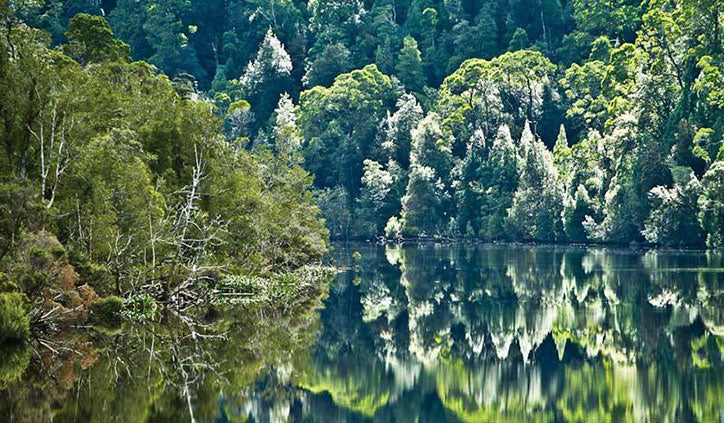
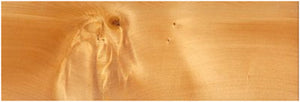
For starters Huon Pine only grows in the wet, temperate rainforests of South West Tasmania – on the whole planet! ‘Lagarostrobos franklinii’ (its proper name) is not actually a pine and is the only member of its family, so a pretty unique tree which grows extremely slowly, averaging just 1 millimetre in girth per year. They can grow to be 2,500 years old which means some of them started life BC! Add to this the fact that they do not start to reproduce until 600 to 800 years of age and you have a very special tree whose timber also has remarkable properties. The timber has a very high oil content, methyl eugenol to be precise, which renders it impervious to insects, waterproof, and imbues it with its characteristic sappy perfume. The high oil content also means the timber can be bent, shaped, worked and sculpted without splitting and finishes to a superb, fine lustre. Pale straw coloured when first cut, it ages to a rich honey gold. Woodworkers love it!


Click here to view our complete range of Huon Pine Products >>
A little bit of history
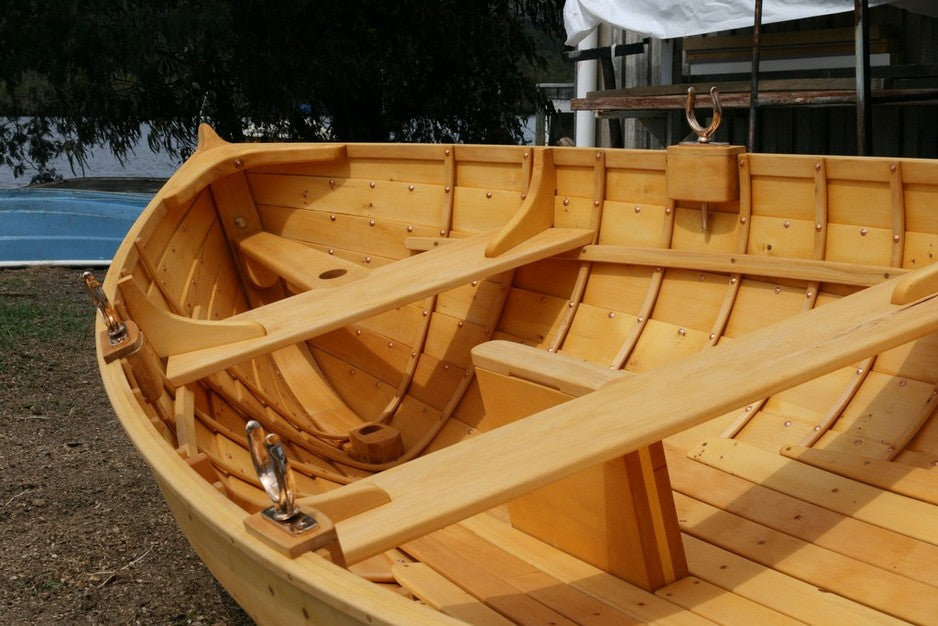
 The early settlers discovered the remarkable properties of Huon Pine and saw its potential for boat building, resistant as it was to those perennial problems of the boat builder, marine borer and screw worm. It turned out to be the best boat building timber in the world and was exploited heavily in the early days, driving a huge industry based on this ‘green gold’.
Interestingly, concern for the future of these venerable giants started early in the last century – even back then it was apparent that there would be no next generation of trees to be had, their slow growth precluding the possibility of plantation farms.
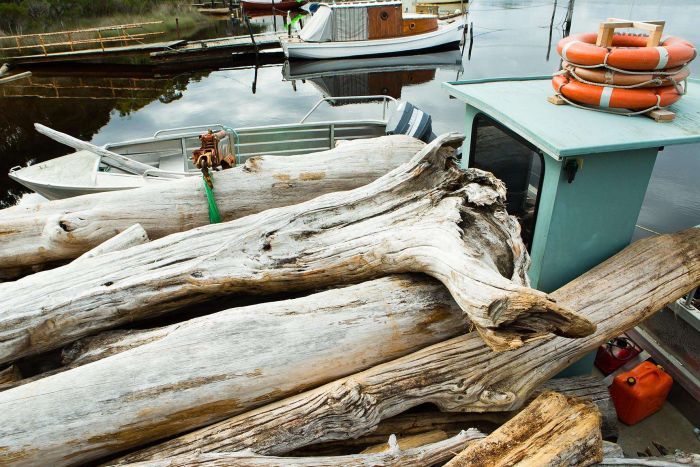
The felling of green Huon Pines stopped completely in the 1970’s after a consensus that it was neither sustainable nor prudent to cut down trees that were 1000 years old. However, a careful stockpiling operation was begun when trees were felled and collected prior to the flooding of several valleys to create dams for hydro electric schemes. For decades these logs were tied into huge rafts and left to float unperturbed on the water until needed. The stockpile created when Lake Gordon was flooded in 1972 still supplies the majority of logs released for use each year.
The retrieval of stumps left over from old logging is another source of salvage timber and led to the discovery of tons of ancient buried Huon pine logs, some dated at 38,000 years old and still intact despite being buried in the damp earth all that time.
Who controls the stocks?
85% of remaining Huon Pine forests are conserved in National Parks while 15% is managed by Forestry Tasmania for salvage. Forestry Tasmania controls and surveys ALL salvage/harvest sites and only 3 sawmills are licensed to process logs.
Is it sustainable?
Because of the strict control by Forestry Tasmania and the granting of only 3 licenses to cut Huon pine sawlog, it is estimated that the supplies of salvaged dead timber will last for another 2 generations. After that these ancient giants in the remaining forests will be left in peace to carry on long after we have gone – we hope that future governments adhere to this policy, and now is the moment to say “hats off to Bob Brown” for all he and his supporters did to protect the remaining forests and wild rivers of South West Tasmania.
What is Huon Pine used for now?
As mentioned, Huon Pine is the boat building timber nonpareil and remains so today. It is much prized for furniture making and cabinetry work especially the bird’s eye and figured timbers. It is also used for small artefacts, homewares, souvenirs and creative woodcraft of which we have a varied selection here at Australian Woodwork.
Click here to view our range of Huon Pine >>
Why Huon Pine Works in the Kitchen
Beyond boat building and fine cabinetry, Tasmanian Huon Pine is one of Australia’s most sought-after timbers for kitchen boards and utensils. Its ultra-fine, even grain is gentle on knife edges, while its natural essential oil (methyl eugenol, up to about 7% of the timber’s weight) helps repel moisture and gives the wood its clean, unmistakable aroma. Food safety research led by Dr. Dean O. Cliver at the University of Wisconsin and UC Davis found that on wooden cutting and serving boards, liquid and bacteria are drawn into the wood’s capillary structure within minutes, where they do not multiply and gradually die off.
Because Huon Pine is slightly softer than dense Australian hardwoods like Tasmanian Blackwood, one-piece boards such as our Huon Pine Cheese or Bread Board ($105) and striped Blackwood & Huon Pine Presentation Board ($179–$195) are ideal for cheese, bread, antipasto, and light slicing, while our 4cm-thick Huon Pine Endgrain Cutting Board ($250–$350) and Huon Pine All Purpose Kitchen Board ($275) are built for everyday kitchen prep. Read more in Why Huon Pine Makes a Beautiful Cheese and Bread Board and our guide to Christmas Grazing Boards: How to Choose an Australian Timber Cheese Board.
Looking After Huon Pine: Simple Care Tips
- Hand wash only: Wipe or wash in warm water with a small drop of mild dish detergent, then rinse and dry straight away with a tea towel. Never soak Huon Pine or place it in a dishwasher.
- Dry on its edge: Stand boards upright on their edge so air circulates evenly across both faces.
- Wipe up red wine and beetroot promptly: Because Huon Pine is a pale, golden timber, strong pigments like red wine can mark the surface if left to sit.
- Condition when dry: When the timber starts to look dry, rub in a light coat of Wood Butter ($24, mineral oil and pure beeswax), leave for an hour, and buff off any excess. See our full guide on how to clean and care for wooden boards and utensils.
Frequently Asked Questions About Huon Pine
1. Is Huon Pine actually a pine?
No. Despite its colonial name, Huon Pine (Lagarostrobos franklinii) is not a true pine (family Pinaceae); it belongs to the southern conifer family Podocarpaceae and is the sole species in the genus Lagarostrobos, native only to the wet temperate rainforests of western and south-western Tasmania.
2. Why does Huon Pine smell so good?
Huon Pine contains a natural essential oil rich in methyl eugenol (up to around 7% of the timber’s weight). This natural oil gives the wood its warm, lingering scent and helps protect the timber against moisture, rot, fungal decay, and marine borers.
3. Is it legal and sustainable to buy Huon Pine?
Yes. Felling living Huon Pine trees is strictly prohibited, and over 85–90% of remaining Huon Pine habitat is permanently protected in Tasmanian reserves and World Heritage wilderness areas. All Huon Pine used by our Tasmanian craftspeople comes from tightly regulated salvaged logs—recovered from historic river and hydro-storage salvage sites and old harvest plateaus managed by Sustainable Timber Tasmania (formerly Forestry Tasmania) and distributed through Island Specialty Timbers.
4. Does Huon Pine change colour as it ages?
Yes. Freshly dressed Huon Pine is a pale straw-cream colour and gradually matures with light exposure and use into a warm, glowing honey-gold patina. Explore our full collection of handcrafted Tasmanian Huon Pine kitchenware and gifts.
In an op shop I found a little clock and keys set into a piece of Huon Pine. It was made in ’Wayne’s Workshop." I would just be interested in finding out when it was made as it seems quite old and who Wayne was. or is.
Hello. Is Huon Pine suitable for using In the Ground to make a Pergola.
Thanks
Does Huon Pine have similar antibacterial and deodorising properties as things like cedar – for example making shoe trees out of huon pine?
Is Huon Pine suitable for house framing, ?
Hello, could you give me some information,
Is Huon pine suitable to use as a frame for house building, if so what cost and cartage to Victoria would be,,,
Thanks Bev.