































Tasmanian Myrtle, our link to Gondwana
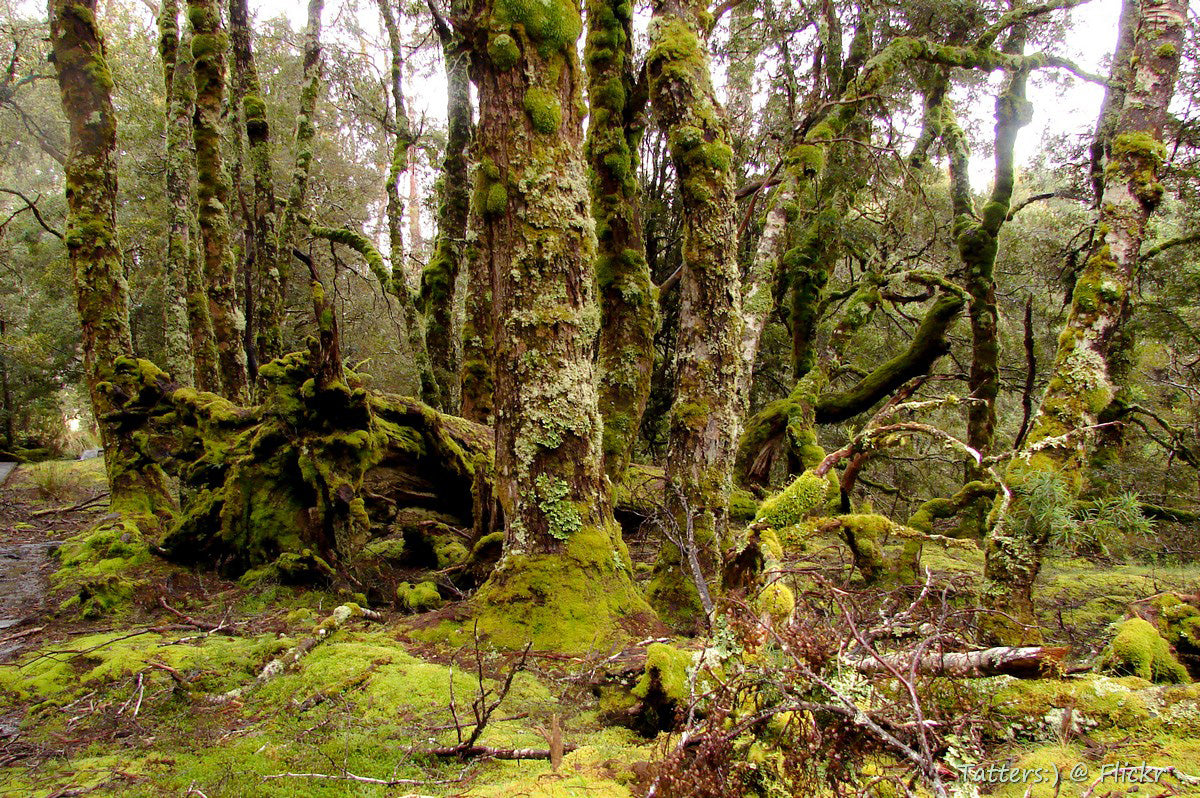
flickr photo by Tatters ✾ shared under a Creative Commons (BY-NC) license
Tasmanian Myrtle (Nothofagus cunninghamii) is a fine-grained Australian hardwood that traces back to ancient Gondwanan forests. It is valued for its consistent grain and ability to produce a smooth, refined surface, which is where it is most often used.
What Makes It Different
Myrtle machines cleanly and finishes evenly. It does not tear or vary unpredictably across the surface, which makes it reliable when a uniform result is required.
This consistency is part of what defines Myrtle, a timber shaped over millions of years in stable rainforest environments.
Compared to denser hardwoods, it is easier to shape and refine. Compared to lighter timbers, it produces a more stable finished surface. That balance defines where it is used.
How It Was Used
Myrtle has long been used in furniture, panelling, and interior joinery where the final surface was visible. It was not chosen for structural performance, but for how it looked once finished.
What Changed
Highly figured material such as Tiger Myrtle is less common, which tends to limit its use to more selective applications.
How It Is Used Now
Myrtle appears in objects where the surface is handled, seen, and judged up close. Its consistency makes it suited to items that rely on finish rather than weight or hardness.
Browse our range of Tasmanian Myrtle pieces, including items where surface quality is the defining characteristic.
Wine Bottle Coaster relies on a flat, even surface to sit cleanly on a table without rocking or marking, which is where Myrtle’s consistency shows.

French Style Rolling Pin depends on a smooth, uninterrupted surface to roll evenly without catching, which suits Myrtle’s fine grain.

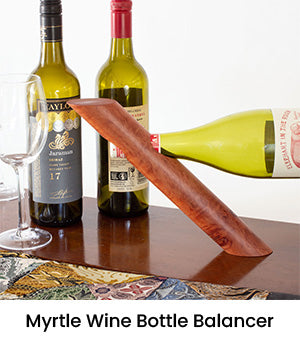
Wine Bottle Balancer uses that same uniform grain to keep the visual balance clean, without distractions in the surface.
Myrtle is not defined by strength or weight. It is defined by how it finishes, which is why it appears in objects where the surface is the point.